At some point every homebrewer faces the same fork in the road: keep using malt extract or take the plunge into all-grain brewing. Both methods produce excellent beer. The right choice depends on your setup, how much time you want to spend on brew day, and how deep you want to go on flavor control. Here’s the honest comparison.
What Is Extract Brewing?
In extract brewing, someone else has already done the mashing for you. A maltster converts raw grain into a concentrated sugar syrup (liquid malt extract, or LME) or a dried powder (dry malt extract, or DME). You dissolve it in hot water, boil with hops, cool, and ferment.
The advantages are hard to argue with for newer brewers:
- Brew day is 2–3 hours instead of 4–6
- No mashing equipment required — just a kettle and a heat source
- Consistent, predictable results from the very first batch
- Easy recipe scaling — add more extract for higher gravity
The trade-off is reduced control. You’re locked into the flavor and fermentability profile baked into the extract, which limits what you can do with the malt side of a recipe. Specialty grains can still be steeped (not mashed) to add color and some flavor, but you can’t modify things like mash temperature, which affects body and residual sweetness.
The American Homebrewers Association notes that extract brewing is an entirely legitimate method used by brewers at every experience level — it’s not a beginner crutch to grow out of.
What Is All-Grain Brewing?
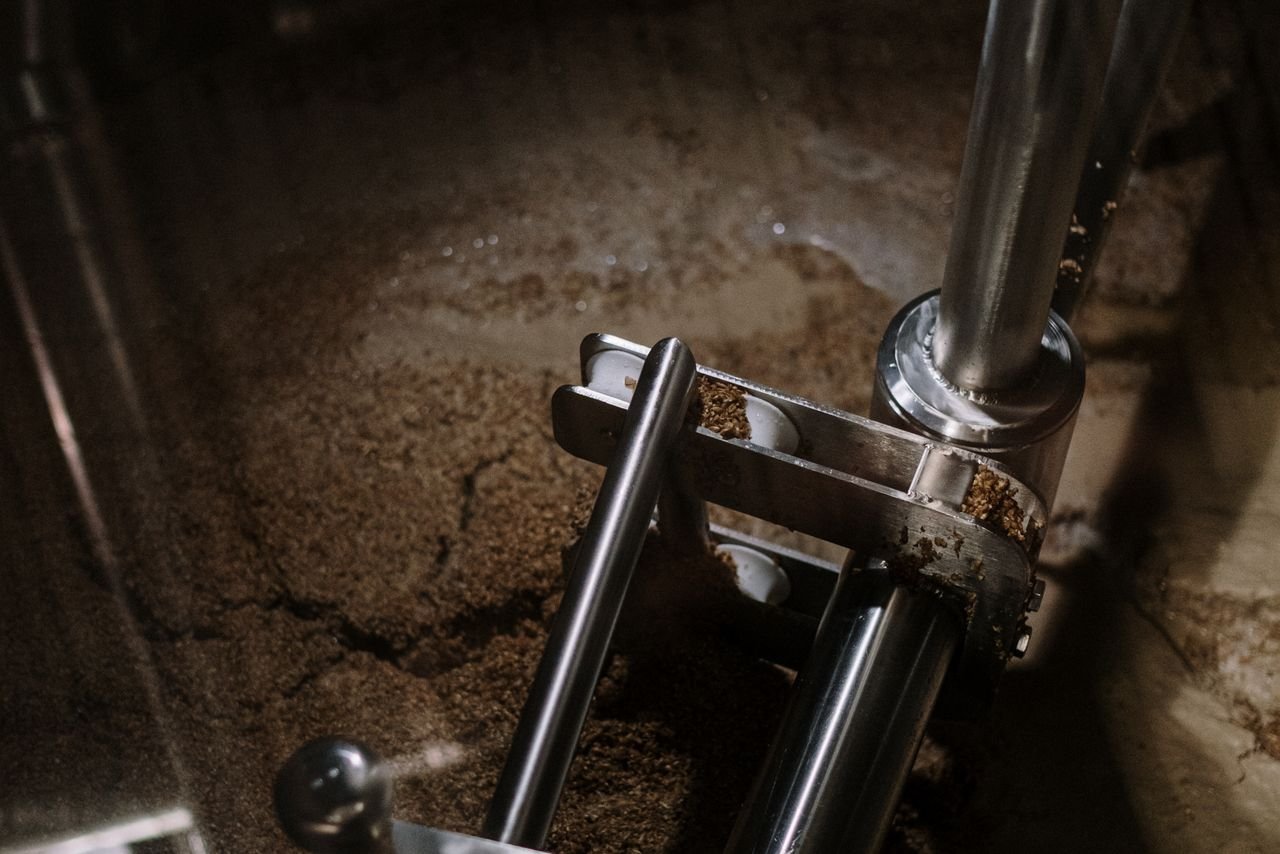
All-grain brewing mimics what commercial breweries do: you start with raw malted barley (and possibly other grains), mix it with hot water at a precise temperature to activate enzymes, and convert starches into fermentable sugars. This process is called mashing.
A standard all-grain mash temperature of 148–158°F (64–70°C) activates beta-amylase (produces more fermentable wort for drier, lighter beer) and alpha-amylase (produces less fermentable wort for fuller, sweeter body). Mash at 148°F for a dry, attenuative result; mash at 156°F for a fuller mouthfeel. That level of control is exactly what all-grain gives you that extract cannot. MoreBeer stocks a wide range of base malts for all-grain brewing, from American two-row to Maris Otter.
Additional all-grain advantages:
- Full recipe customization from grain to glass
- Lower ingredient cost — raw grain is typically cheaper per pound than extract
- Wider style range — lagers, Czech pilsners, wheat beers all benefit from fresh malt
- Fresh malt flavor — extract can develop a slightly stale or “twang” character over time
Equipment Differences
This is where the barrier to entry shows up. All-grain requires either a dedicated mash tun (a cooler or a second kettle with a false bottom) or the brew-in-a-bag (BIAB) method, where the grain sits in a mesh bag inside the kettle. BIAB has made all-grain accessible to brewers with minimal gear.
| Equipment | Extract | All-Grain (3-vessel) | All-Grain (BIAB) |
|---|---|---|---|
| Brew kettle | 5+ gal | 10+ gal (HLT + kettle) | 10+ gal |
| Mash tun | Not needed | Cooler or kettle | Kettle (same as above) |
| Grain bag | Optional | Not needed | Required |
| Time investment | 2–3 hrs | 5–6 hrs | 4–5 hrs |
| Startup cost | Low | Medium–High | Low–Medium |
For a full breakdown of the BIAB approach, see our Brew in a Bag complete guide.
Flavor: Is There a Real Difference?
Honest answer: in a blind tasting, most people cannot reliably distinguish between a well-made extract beer and an all-grain equivalent. The gap is real but smaller than extract detractors claim.
That said, experienced palates — especially those trained to the BJCP Style Guidelines — can detect extract “twang” in lighter, cleaner styles like Kölsch, Pilsner, or American Light Lager. Darker styles like stouts and porters mask it entirely. Hop-forward IPAs fall somewhere in between.
John Palmer, author of the homebrewer’s bible, notes that fresh liquid malt extract used on the same day it’s opened produces results very close to all-grain. The problem is staleness in LME that’s been sitting in a jug for months.
Where all-grain genuinely shines:
- Lagers and pilsners — fresh Pilsner malt flavor is unmistakable
- Hefeweizens — a turbid mash produces the starchy mouthfeel that’s characteristic of the style
- Highly attenuated styles — precise mash temperature lets you dial in FG exactly
- High-gravity beers — replacing extract with grain keeps cost manageable
The Partial Mash Middle Ground
If you want more control than extract but aren’t ready to go fully all-grain, partial mash (also called mini-mash) is a legitimate middle path. You mash 2–5 lbs of base malt alongside your specialty grains, then supplement with extract to hit your target gravity. You get real mash flavor contribution without needing a full grain bill or a large vessel.
Many brewers spend several batches at the partial mash stage before jumping to all-grain, using that time to learn the mashing process at a manageable scale. Northern Brewer offers partial mash recipe kits that make this transition particularly approachable.
Cost Comparison
For a 5-gallon batch with a starting gravity around 1.050:
| Method | Typical ingredient cost |
|---|---|
| Extract (LME/DME) | $25–$40 |
| Partial mash | $20–$30 |
| All-grain | $15–$25 |
The savings per batch are modest, but they add up significantly if you brew every few weeks. The equipment cost for all-grain (especially BIAB) pays itself back within 10–20 batches.
The Siebel Institute, one of the world’s oldest brewing schools, uses all-grain processes exclusively in their professional curriculum — but they’d be the first to tell you that a well-made extract beer is a well-made beer.
Which Should You Choose?
Start with extract if:
- You’re in your first 3–5 batches
- You have limited time on brew day
- You want to focus on fermentation, yeast health, and process before adding mash complexity
- You’re brewing dark or hop-forward styles where the malt character is less critical
Move to all-grain (or BIAB) when:
- You’re comfortable with the basics and want more control
- You’re brewing lagers, wheat beers, or other malt-forward styles
- You want to reduce ingredient costs over time
- Customizing your grain bill sounds genuinely exciting rather than like homework
There is no wrong answer. The Brewers Association recognizes homebrewing achievements regardless of method, and plenty of award-winning homebrew gets made from extract kits every year.
The Brew Professor Takeaway
Extract brewing is a legitimate, capable method — not a consolation prize. All-grain gives you more control and a lower per-batch cost once you’re ready for it. Start where you’re comfortable, master your fermentation process, and upgrade your method when the curiosity becomes irresistible. The best homebrew is the one you actually make — not the one you’re still planning.