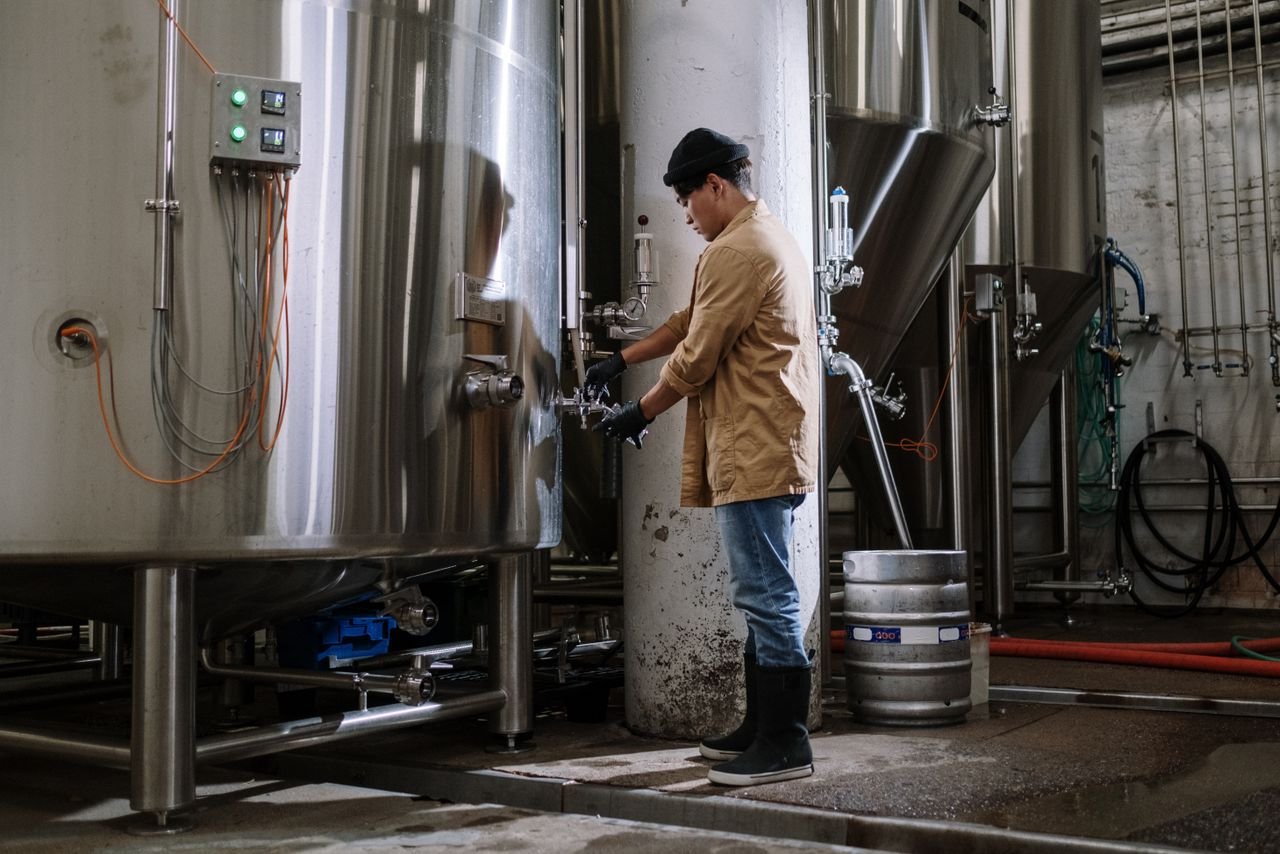
Ask any experienced homebrewer what single thing most separates great batches from ruined ones, and they’ll tell you the same thing: sanitation. You can source the finest hops in the world and pitch the most expensive yeast, but if your fermenter harbors a wild bacteria or a stray wild yeast, your beer is going to taste like wet cardboard or vinegar before the week is out. The good news is that proper cleaning and sanitizing is simple, cheap, and entirely within your control.
Cleaning vs. Sanitizing: They Are Not the Same Thing
This is the most important concept in the whole article, so let’s get it out of the way first.
Cleaning removes visible debris — beer residue, hop matter, trub, and dried yeast. It requires physical contact: scrubbing, soaking, or rinsing.
Sanitizing kills or inhibits microorganisms on a surface that has already been cleaned. Sanitizers do not work on dirty surfaces — organic matter neutralizes them.
The order is always: clean first, sanitize second, never skip either step. Think of cleaning as mopping the floor and sanitizing as disinfecting it. Mopping a floor with disinfectant doesn’t actually disinfect it if you haven’t removed the grime first.
The Best Cleaning Products for Homebrewing
PBW (Powdered Brewery Wash)
PBW is the gold standard for homebrewers. It’s an oxygen-based alkaline cleaner that dissolves proteins, hop oils, and yeast residue without scratching plastics or requiring aggressive scrubbing. Mix at roughly 1–2 oz per gallon of warm water, soak equipment for 20–30 minutes, and rinse thoroughly. It’s biodegradable, safe on all brewing surfaces, and beloved by both homebrewers and commercial craft breweries. The Brewers Association recommends similar oxygen-based cleaners as best practice for craft operations. You can source PBW and other brewing cleaners through Northern Brewer or MoreBeer.
OxiClean Free
An affordable alternative to PBW, OxiClean Free (the unscented version — very important) is the same class of oxygen-based alkaline cleaner and works almost as well at a fraction of the cost. Use 1–2 tablespoons per gallon of warm water.
Dish Soap — Use Sparingly
Standard dish soap is fine for pre-cleaning large debris from kettles and spoons but is absolutely not for anything that contacts post-boil wort. Soap residue kills head retention and can leave off-flavors. Rinse anything washed with soap very thoroughly before your PBW soak.
The Best Sanitizers for Homebrewing
Star San
Star San is the homebrewer’s best friend and the most widely used no-rinse sanitizer in the hobby. It’s a phosphoric acid–based product that kills bacteria, wild yeast, and most pathogens on contact. Mix at 1 oz per 5 gallons of water — the resulting foam is harmless (“don’t fear the foam” is a legitimate homebrewing mantra). As long as you’ve made it at the correct dilution with clean water, there’s no need to rinse. Equipment just needs to drain and it’s ready. The American Homebrewers Association frequently lists Star San among the essentials for new brewers, and the BJCP exam study materials emphasize sanitation as foundational to producing competition-quality beer.
Iodophor
Iodophor is an iodine-based sanitizer that also works well at low concentrations (12.5 ppm active iodine, roughly 1/2 oz per 5 gallons). It has a slight brown tint that can stain plastics over time, but it’s highly effective and no-rinse at proper dilution. Some brewers prefer it for fermenters they don’t want to expose to the acidic Star San repeatedly.
Bleach — A Last Resort
Household bleach works but requires a thorough rinse (which reintroduces contamination risk from tap water), and residual chlorine can create chlorophenol off-flavors. If you use it, follow with a campden tablet rinse solution to neutralize the chlorine. Star San or Iodophor are simply better options for homebrewing.
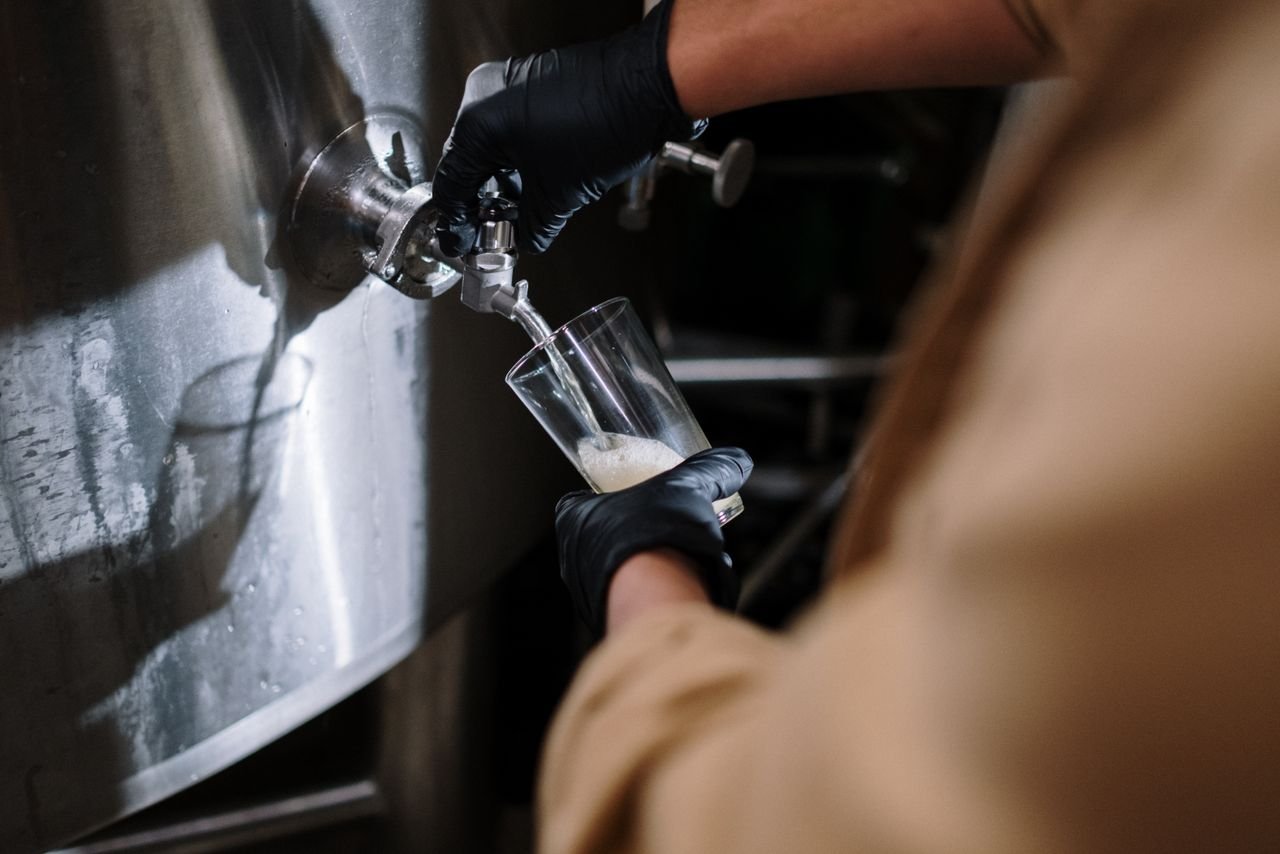
A Step-by-Step Sanitation Routine
Here’s the routine that will protect your beer from brew day to packaging:
- Immediately after use — Rinse all equipment with hot water to remove fresh residue. Dried trub is much harder to remove than fresh.
- PBW soak — Fill fermenters, airlocks, auto-siphons, tubing, and small parts with a PBW solution. Soak for 20–30 minutes minimum. For kettles with cooked-on residue, a one-hour soak or light scrub with a non-abrasive pad works.
- Rinse thoroughly — Rinse all surfaces three times with cold or warm water to remove all cleaning agent residue.
- Prepare Star San solution — Mix 1 oz Star San per 5 gallons of water in a bucket. Keep a spray bottle of this mix on your brewing bench for quick spot sanitizing.
- Sanitize just before use — Fill fermenters with Star San solution, swirl to coat all surfaces, and drain (don’t rinse). For small parts, soak for at least 60 seconds.
- Sanitize on contact — Anything that touches your post-boil wort or fermenting beer must be sanitized: siphon, tubing, hydrometer, thermometer, funnel, bottle caps, every single thing.
Sanitizing Bottles for Conditioning
Bottle conditioning adds a small but critical step. Each bottle must be sanitized immediately before filling. A dishwasher with a heated dry cycle sanitizes effectively if you skip the soap and run the bottles immediately before use. Otherwise, a Star San soak for 60 seconds is the standard. For a detailed walkthrough of the whole packaging process, see our guide to bottle conditioning beer.
Common Sanitation Mistakes to Avoid
- Letting equipment air-dry between uses — Wet equipment left out can grow mold. Dry thoroughly or store in a sanitized state.
- Using scented cleaning products — Fragrance compounds cling to plastics and contaminate beer. Always use unscented.
- Skipping the kettle — The boil kills everything in your wort, but the inside of a dirty kettle can harbor residue that burns on and causes flavor problems. PBW the kettle after every use.
- Scratching plastics — Scratched plastic fermenters harbor bacteria in micro-abrasions. Use soft cloths or sponges, never scrubbing pads, on plastic. Replace plastic fermenters every 2–3 years. How to Brew by John Palmer dedicates a full chapter to sanitation for exactly this reason.
- Making sanitizer too strong — More is not better. Over-concentration can leave noticeable off-flavors. Mix to the label instructions.
What About Kegs?
Kegs require the same cleaning-then-sanitizing routine but with a few extra steps due to their gas and liquid posts. After each use: rinse with hot water, soak with PBW solution (disassemble posts and use a keg brush), rinse thoroughly, then flush with Star San solution and seal under CO₂ pressure. CraftBeer.com has resources on draft system maintenance that apply well to homebrew kegging setups.
The Brew Professor Takeaway
Sanitation doesn’t have to be intimidating or expensive. PBW and Star San together cost around $20–25 and last dozens of batches — the Master Brewers Association of the Americas publishes technical resources on brewery sanitation that apply equally well at home scale. The routine — clean, rinse, sanitize, drain — becomes second nature after your first few brews. Every minute you spend on proper sanitation is an investment in beer you’ll actually want to drink. The microorganisms that ruin beer don’t announce themselves; they’re silent, invisible, and entirely preventable.