There is something deeply satisfying about cracking open a beer you brewed yourself — one that matches exactly the flavor profile you were chasing. Homebrewing is a hobby with a low barrier to entry, a genuinely forgiving learning curve, and a delicious payoff. This guide walks you through everything you need to brew your first batch at home, from buying the right gear to lifting a cold pint a few weeks later.
What You Need to Get Started
Before you pour a single ounce of water, gather your equipment. A basic starter setup costs somewhere between $80–$150 and handles most beginner recipes. The American Homebrewers Association maintains a helpful resource library for new brewers, and your local homebrew shop (LHBS) can usually put together a starter kit for you.
Essential equipment:
- 5-gallon brew kettle (at minimum; 8-gallon is better for full-volume boils)
- 6.5-gallon plastic bucket or glass carboy as a primary fermenter
- Airlock and stopper
- Auto-siphon and racking cane
- Bottle capper and 48 bottles, OR a kegging setup
- Hydrometer and thermometer
- Star San or similar no-rinse sanitizer
- Long spoon (stainless or food-grade plastic)
If you’d rather start with a curated bundle, check out our guide to the best starter brewing kits for new homebrewers.
The Four Ingredients of Beer
Beer is elegant in its simplicity. According to the German Reinheitsgebot, beer contains exactly four ingredients: water, malt, hops, and yeast. Each one shapes the final product.
- Water makes up about 90–95% of your beer. Tap water is fine for a first batch; dial in mineral content later.
- Malt (malted barley, usually) provides fermentable sugars and color. Malt extract — either dry (DME) or liquid (LME) — is the easiest starting point; it eliminates the mashing step entirely.
- Hops contribute bitterness, aroma, and a preservative effect. Early-boil additions add bitterness (alpha acids); late-boil or dry-hop additions add aroma.
- Yeast consumes the sugars and produces alcohol and CO₂. Dry yeast packets like Safale US-05 are reliable, affordable, and forgiving.
For a deep dive on the grain side of things, the Brewers Association publishes extensive technical resources on malt and raw materials.
Choosing Your First Recipe
Resist the urge to brew something complicated right out of the gate. An American Pale Ale or a basic Blonde Ale built around liquid malt extract lets you learn the process without wrestling with a complex grain bill. Look for extract kits sold at homebrew shops or online — they include pre-measured hops and a recipe sheet.
A solid first-batch target:
| Parameter | Target range |
|---|---|
| Original Gravity (OG) | 1.040–1.055 |
| Final Gravity (FG) | 1.008–1.015 |
| ABV | 4–6% |
| IBU | 20–40 |
| Fermentation temp | 65–72°F (18–22°C) |
Brew Day: The Process in Brief
On brew day, you’ll be on your feet for 4–5 hours. Here is the flow:
- Sanitize everything that touches your wort post-boil. A 1 oz / 5-gallon solution of Star San is your best friend.
- Heat your water to about 155°F (68°C) if steeping specialty grains, or simply to a rolling boil for a straight extract recipe.
- Add malt extract off the heat, stir thoroughly to prevent scorching, then bring back to a boil.
- Add hops per the recipe schedule (bittering hops at 60 minutes, flavor/aroma hops later).
- Boil for 60 minutes, watching the kettle to prevent boilovers.
- Chill the wort quickly to 65–70°F (18–21°C) using an ice bath or a wort chiller — fast cooling reduces the risk of contamination and improves clarity.
- Transfer to fermenter, aerate by rocking the vessel, then pitch your yeast.
The John Palmer “How to Brew” resource is the gold-standard reference for every step above and is freely available online.
Fermentation: What Happens Next
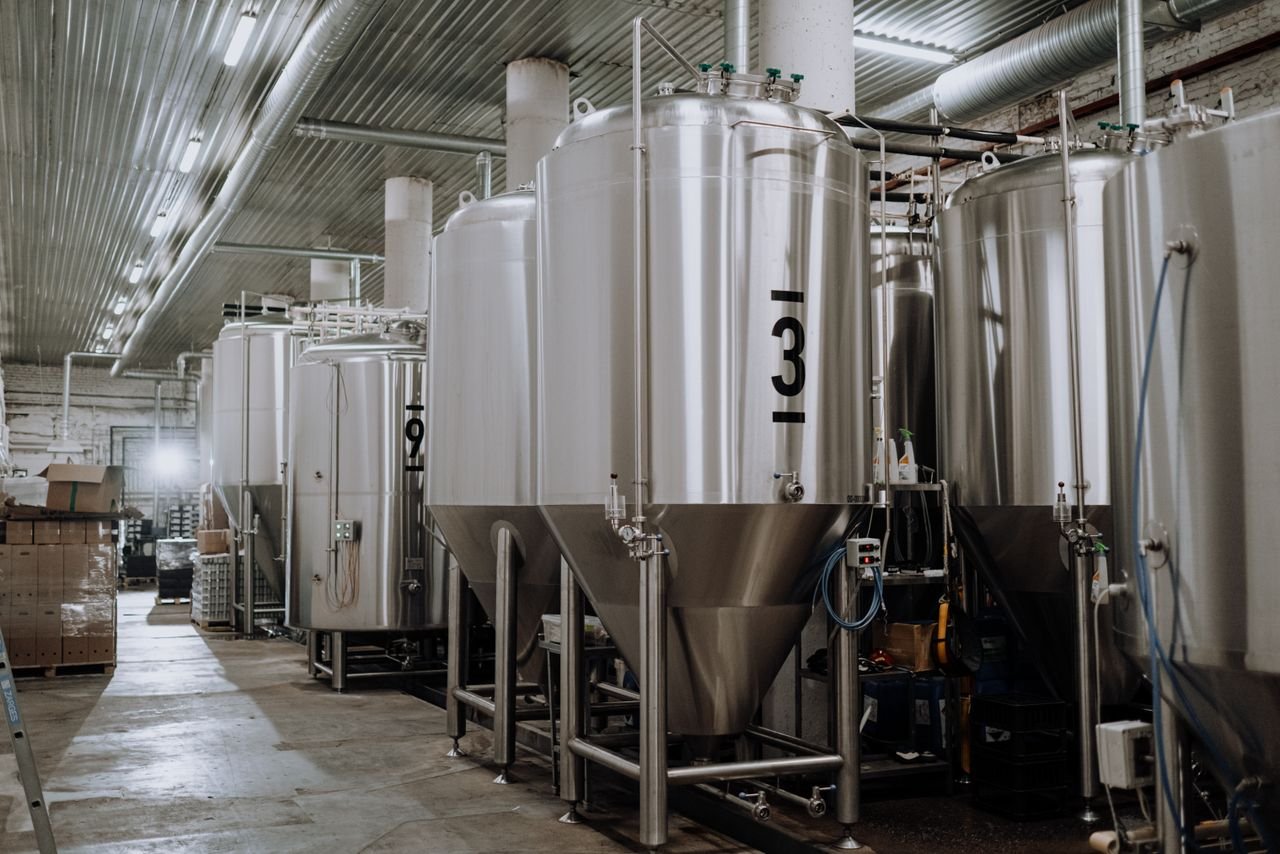
Seal your fermenter with an airlock filled with a little sanitizer solution, then move it to a cool, dark spot. Within 12–48 hours you should see bubbles or krausen (a foamy cap on the wort). That activity is your yeast converting sugars to alcohol and CO₂. Most ales ferment actively for 3–5 days and are ready to package after 1–2 weeks total.
CraftBeer.com describes fermentation as “the soul of brewing” — once the yeast is in, patience is the only ingredient left. Resist the urge to open the fermenter and check constantly; oxygen at this stage is the enemy.
Take a gravity reading with your hydrometer before packaging. If your final gravity matches your recipe’s expected FG on two readings taken 48 hours apart, fermentation is complete.
Carbonation and Packaging
You have two main paths: bottles or a keg.
Bottling is the beginner’s default. Dissolve about 3/4 cup (4–5 oz) of corn sugar in 2 cups of boiling water, let it cool, then gently stir it into your beer before filling bottles. Cap them tight and leave at room temperature for 2 weeks so the yeast can carbonate in the bottle.
Kegging is faster and more convenient once you have the gear — beer can be force-carbonated at 12–14 PSI over 3–5 days. Either way, cold-condition your beer in the fridge for at least 24 hours before drinking.
The BJCP Style Guidelines are handy for checking whether your finished beer hits the mark for whatever style you brewed.
Your First Tasting
Pour carefully, leaving sediment behind in the bottle, and enjoy your creation. Evaluate color, clarity, aroma, and flavor. Note what worked and what you’d change — that notebook becomes your most valuable brewing tool over time. BeerAdvocate offers a useful flavor lexicon if you want language for what you’re tasting.
Don’t be discouraged if batch one isn’t perfect. Most experienced homebrewers will tell you their first batch was undrinkable — and they brewed hundreds more anyway.
The Brew Professor Takeaway
Homebrewing is one of those hobbies that pays dividends fast. Your first batch teaches you the whole process end to end; every batch after refines it. Start simple, keep everything clean, control your fermentation temperature, and your beer will be better than you expect. Once you’ve got the basics down, the world of all-grain brewing, specialty malts, and exotic hops opens up — but that’s a project for batch two.