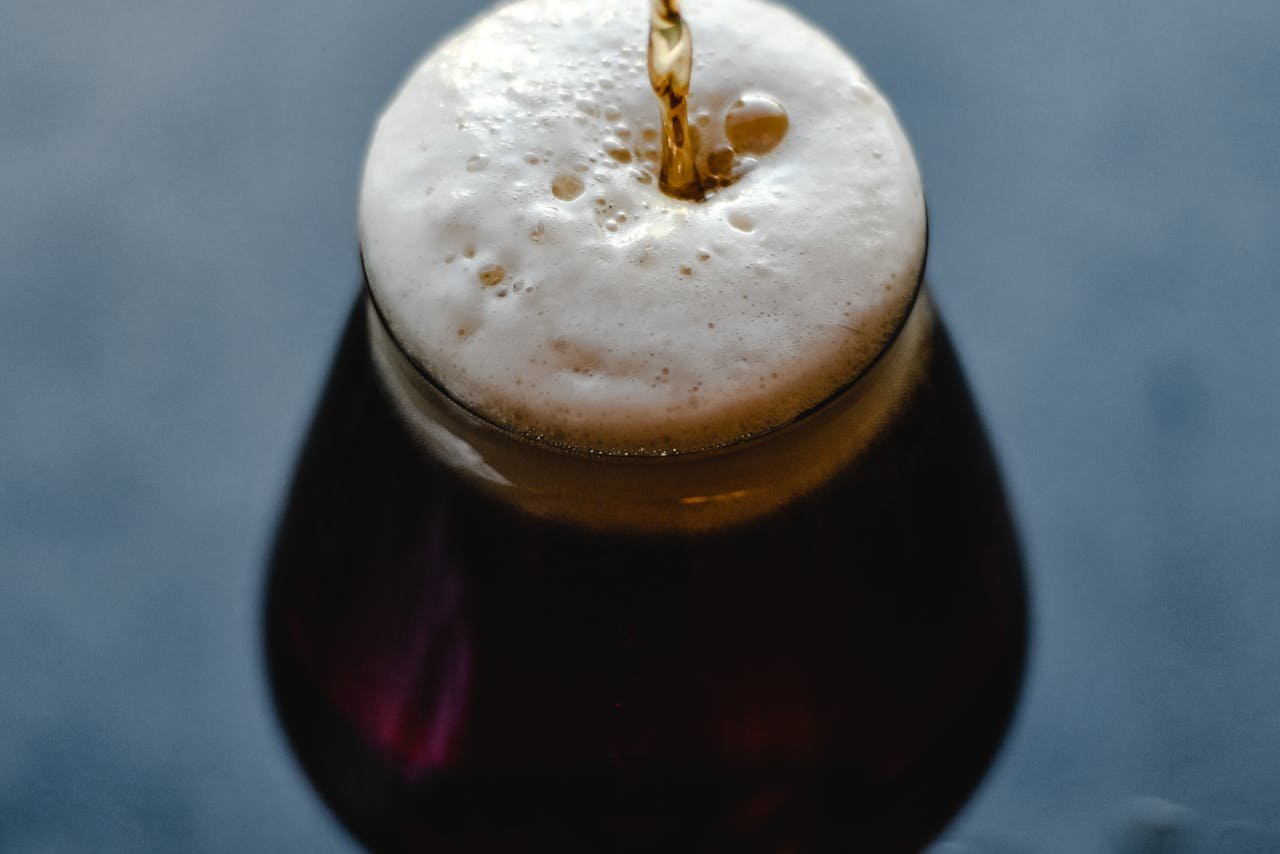
Barrel aging is one of the most transformative things a brewer can do to a finished beer. Take an already complex imperial stout, put it in a bourbon barrel for twelve months, and something extraordinary happens: the wood breathes, the spirit seeps in, the beer evolves. What comes out is richer, deeper, and more layered than anything that went in. It’s one of the rare techniques in craft brewing with no analog in the rest of the process — you simply wait, and the barrel does most of the work.
A Brief History of Barrels in Beer
Barrel aging sounds modern, but it’s actually ancient practice briefly interrupted by modernity. Before stainless steel became standard in the 20th century, virtually all beer was stored, conditioned, and transported in wooden barrels. The wood imparted vanilla, oak, and tannins; any residual spirit or wine character from a previously used barrel was an additional layer.
The contemporary craft movement rediscovered this intentionally. Goose Island Brewing in Chicago is widely credited with launching the modern barrel-aged beer era when they released their Bourbon County Brand Stout in 1992, aging an imperial stout in Jim Beam barrels. BeerAdvocate has listed that beer among the highest-rated in the world for years, and it effectively created a genre.
How Barrel Aging Works
A barrel is not a neutral container. It’s a living, porous vessel that interacts with its contents in several key ways:
Spirit or wine extraction: If the barrel previously held bourbon, Scotch, rum, red wine, or sherry, the wood has absorbed those liquids into its grain. The beer draws them back out over months, picking up the characteristic flavors of whatever was there before.
Wood character: Oak itself contributes vanilla, coconut, toasted wood, and tannins. The degree depends on the char level of the barrel. Heavily charred bourbon barrels release sweet vanilla and caramel; lighter-toasted wine barrels yield more savory, tannic notes.
Oxidation: Wood is permeable. A small, consistent intake of oxygen through the staves promotes oxidation reactions that develop sherry-like, nutty, or dried-fruit flavors — particularly desirable in high-gravity beers like barleywines and imperial stouts.
Microbiological activity: In sour barrel programs, wild yeast (Brettanomyces) and bacteria (Lactobacillus, Pediococcus) in the wood slowly ferment residual sugars, producing the funky, complex, acidic flavors associated with Flemish red ales and lambics.
Common Barrel Types and What They Add
| Barrel Type | Previous Contents | Key Flavors Added |
|---|---|---|
| American oak, charred | Bourbon / Tennessee whiskey | Vanilla, coconut, caramel, sweet oak, boozy warmth |
| American oak | Rye whiskey | Spice, dill, dry oak, pepper |
| American/European oak | Red wine (Cabernet, Merlot) | Tannins, dark fruit, tobacco, earthy |
| European oak | White wine, sherry, port | Dried fruit, nuttiness, stone fruit, savory complexity |
| American oak | Rum | Molasses, tropical fruit, vanilla |
| French oak | Cognac, brandy | Floral, perfumed, spice, stone fruit |
Breweries acquire spent barrels from distilleries, wineries, and sometimes other breweries. Fresh bourbon barrels (used exactly once per US law for whiskey aging) are particularly prized for the intensity of extract still in the wood.
What Beers Are Best Suited for Barrel Aging?
Not every beer benefits from a year in wood. The best candidates share certain qualities:
High ABV: Barrels are relatively expensive and slow. The beer needs the alcohol structure to survive extended aging without spoiling, and the alcohol and malt complexity to stand up to the strong wood and spirit character. Most barrel-aged beers start at 8% ABV and up.
Rich malt character: Imperial stouts, barleywines, and doppelbocks have enough baseline complexity that the barrel adds layers rather than drowning everything.
Dark color and roast character: The chocolate, coffee, and dark fruit notes in a stout synergize well with bourbon and oak character. A pale, hop-forward beer would lose its identity in a barrel.
For sour aging: Wild ales, golden sours, Flanders reds, and lambics are already acidic enough to handle the microbial complexity of wild barrel programs. These beers are often aged for one to three years, sometimes blended across vintages.
Notable Barrel-Aged Styles
Bourbon Barrel Imperial Stout: The flagship of the genre. Chocolate, espresso, vanilla, caramel, and boozy warmth. ABV typically 10–14%. The BJCP style guidelines have now formally recognized this as its own category.
Wine-Barrel Barleywine: English or American barleywine aged in red wine or sherry barrels becomes extraordinarily complex — the toffee and sherry notes overlap in fascinating ways.
Rum-Barrel Porter / Stout: Tropical fruit and molasses notes from rum barrels play well against porter’s chocolate-roast character.
Wild/Sour Barrel Ales: Belgian-style lambics and Flemish reds rely entirely on barrel aging for their character. Cantillon in Brussels and 3 Fonteinen in Beersel are considered the global benchmarks; their methods are explained beautifully by Wikipedia’s lambic article.
Blended/Solera Beers: Some breweries run perpetual “solera” barrels — a small amount of old beer is left behind and blended with fresh beer in a continuous cycle that produces consistent, evolving complexity year after year.
How to Drink and Serve Barrel-Aged Beers
These beers demand consideration. A few guidelines:
- Serve at 55–60°F (13–16°C). Too cold and the complexity shuts down; too warm and the alcohol becomes harsh.
- Use a snifter or tulip. The wide bowl concentrates the aroma, which is where much of the experience lives. Our beer glassware guide covers this in detail.
- Pour slowly. Many barrel-aged beers are highly carbonated and volatile. A slow, careful pour preserves the head and prevents foaming overflow.
- Take your time. These beers evolve in the glass as they warm. The first sip and the last sip at proper temperature can taste quite different.
- Consider cellaring. Many barrel-aged imperial stouts and barleywines improve for 1–3 years. Label them with the date and store in a dark, cool (55°F / 13°C) environment.
The Siebel Institute of Technology notes that barrel-aged beers are among the most analytically complex in the portfolio — the interaction of wood compounds, spirit extracts, and beer chemistry can produce hundreds of unique flavor compounds.
Where to Find Barrel-Aged Beers
Most serious craft breweries release at least one barrel-aged beer per year, usually in autumn or winter. Check brewery anniversary releases, Black Friday special releases, and January or February small-batch drops. Untappd is the best real-time tracker for what’s dropping where. The Brewers Association also publishes annual data on barrel-aged beer production trends across independent craft breweries. The Great American Beer Festival has formal barrel-aged competition categories worth following for discovering nationally recognized examples.
The Brew Professor Takeaway
Barrel aging is where beer and spirit culture intersect, and the results can be among the most complex beverages produced anywhere in the world. The patience required — both from the brewer who commits thousands of dollars of beer to a year or more of aging and from the drinker who waits for release day — is part of what makes a great barrel-aged beer feel earned. When you crack a well-made bourbon-barrel imperial stout, you’re tasting a collaboration between a brewer, a distillery, and twelve months of quiet chemistry inside a piece of American white oak. That’s a story worth sipping slowly.