Hops are the ingredient that most people think about when they think about craft beer, and with good reason. That piney, citrusy, floral, tropical wallop in your IPA comes entirely from hops. But hops are doing more than one job in your beer — they balance sweetness with bitterness, contribute layers of aroma and flavor, and have been used as a natural preservative for centuries. Understanding how hops work, and when in the brewing process to add them, gives you direct control over some of the most expressive flavors in your glass.
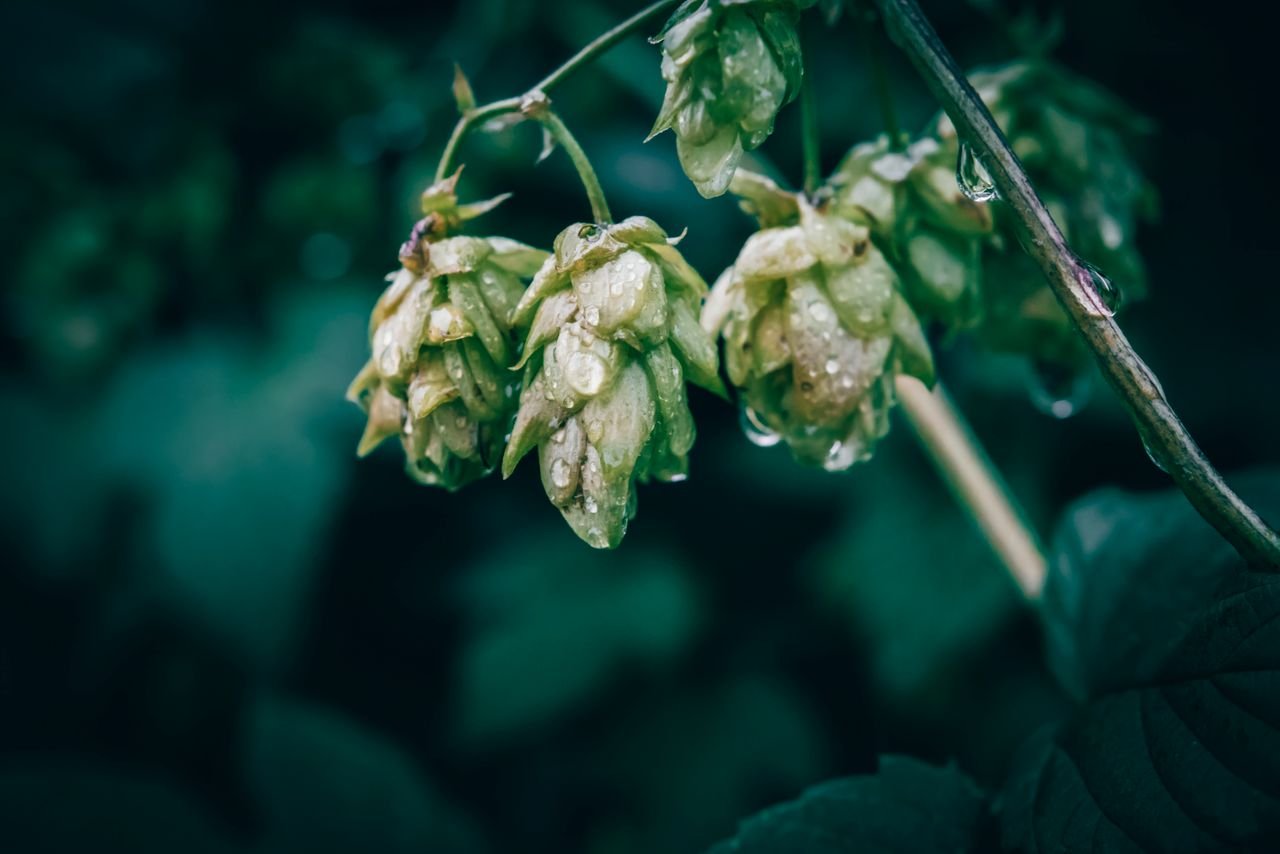
Hops are the cone-shaped flowers of Humulus lupulus, a climbing vine that thrives in temperate climates between about 35° and 55° latitude. The major commercial growing regions are the Yakima Valley in Washington State, Oregon’s Willamette Valley, Germany’s Hallertau region, and New Zealand’s Nelson region — each imparting distinct regional character to their varieties. The Brewers Association tracks hop usage trends annually and the data consistently shows American craft brewers pushing toward more aromatic, later-addition hop-forward styles.
The Chemistry Behind the Flavor
Three major chemical groups in hops matter to brewers.
Alpha acids. These bitter resins (primarily humulone and cohumulone) are responsible for hop bitterness in beer. Alpha acids are not water-soluble in their natural form; they must be isomerized — chemically transformed by heat — during the boil. The longer hops boil, the more alpha acid isomerizes, and the more bitterness ends up in your finished beer. This is why bittering hops are added at the start of a 60-minute boil: maximum time equals maximum bitterness extraction.
Alpha acid content is expressed as a percentage and varies by variety. A bittering hop like Magnum or Columbus might run 12–15% alpha acids. A delicate aroma hop like Saaz might contain 2–5%. The BJCP Style Guidelines express beer bitterness in International Bitterness Units (IBUs), and knowing a hop’s alpha acid percentage lets you calculate how many IBUs a given addition will contribute.
Beta acids. Less important for most homebrewers, beta acids (lupulone) contribute mild bitterness and have significant antimicrobial properties — one key reason hops replaced other bittering herbs in European brewing by the 15th century. The Wikipedia history of hops in brewing documents this transition from gruit herb mixtures to hop-dominant brewing in useful detail.
Essential oils. Volatile aromatic compounds including myrcene, linalool, geraniol, and dozens of others create the huge diversity of hop aromas: citrus, tropical fruit, pine, earth, floral, spice, and more. These oils are highly volatile and evaporate rapidly during a boil. This is why late hop additions (last 5–15 minutes of the boil) and dry hopping (adding hops post-fermentation) are necessary for aroma — you are preserving these oils rather than boiling them away.
Timing: When You Add Hops Changes Everything
The single most important variable in hop usage is timing.
60-minute (bittering) additions. Added at the start of the boil. Maximum bitterness, minimal flavor and aroma contribution. Use high-alpha varieties here for efficiency; their exact flavor character is largely irrelevant since the oils will be driven off.
15–30 minute (flavor) additions. A middle ground — some bitterness, more flavor compounds survive. These additions create the backbone of hop flavor in a recipe.
0–10 minute (aroma) additions. Added at or near flame-out, these preserve aromatic oils while extracting relatively little bitterness. Whirlpool additions — added during a hot whirlpool rest — fall in this category and can contribute enormous flavor and aroma.
Dry hopping. Hops added directly to the fermenter after primary fermentation, at or near room temperature. No bitterness whatsoever — only pure aroma and some flavor. Dry hopping is responsible for the massive tropical and citrus character in hazy IPAs. The How to Brew resource covers dry hopping rates and techniques in detail.
Hop Forms: Whole Cone, Pellet, and Extract
Whole cone hops are the raw flower, dried and compressed slightly. They are used traditionally and are prized by some brewers for their quality, but they absorb a significant amount of wort and require more careful filtration.
Pellet hops are the dominant format in homebrewing and most commercial craft brewing. Whole hops are ground and compressed into small cylinders under cold conditions. Pellets store better than whole cones (oxidation is a constant enemy of hop freshness), are easier to measure accurately, and break up in the kettle without the wort-absorption issue. The American Homebrewers Association recommends storing pellet hops vacuum-sealed in your freezer, where they retain quality for a year or more.
Hop extract is a concentrated liquid or CO2 extract of alpha acids or essential oils. Mainly used commercially for precision bitterness additions or for post-fermentation aroma correction.
A Tour of Major Hop Varieties
The diversity of hop varieties is one of the most exciting developments in modern brewing. New varieties emerge from breeding programs at university and commercial facilities every few years, constantly expanding brewers’ palates.
| Variety | Origin | Character | Common Use |
|---|---|---|---|
| Cascade | US | Grapefruit, floral, spicy | American pale ales, West Coast IPAs |
| Centennial | US | Floral, citrus, pine | American IPAs |
| Citra | US | Tropical fruit, lime, passion fruit | Hazy and West Coast IPAs |
| Mosaic | US | Blueberry, tropical, earthy | Hazy IPAs, pale ales |
| Simcoe | US | Pine, passion fruit, earthy | West Coast IPAs, DIPAs |
| Saaz | Czech | Earthy, spicy, herbal | Pilsners, Czech lagers |
| Hallertau Mittelfrüh | German | Floral, herbal, spice | Lagers, Bavarian styles |
| Nelson Sauvin | NZ | White wine, gooseberry, tropical | Specialty ales, pale ales |
| Fuggle | UK | Earthy, woody, mild spice | English ales, porters |
| East Kent Goldings | UK | Floral, honey, gentle spice | English bitters, ESBs |
The regional character is not accidental. European noble hops — Saaz, Hallertau, Spalt, Tettnanger — were cultivated for centuries for the lager styles dominant in their home countries: spicy, herbal, and restrained. American varieties emerged from a different brewing culture that prized bold, assertive character. New Zealand and Australian varieties often produce intensely tropical and wine-like profiles unlike anything from the Northern Hemisphere.
BeerAdvocate is a useful reference for exploring how different hop varieties appear in specific commercial beers, which helps you connect abstract descriptions to sensory reality.
Calculating Bitterness: IBUs and the Tinseth Formula
The standard formula for calculating IBUs from hop additions is the Tinseth formula (developed by Glenn Tinseth in the 1990s and used in virtually every brewing calculator). It accounts for alpha acid percentage, the weight of the hop addition, the boil volume, and the boil time. You do not need to do this by hand — free tools like Brewer’s Friend and BeerSmith handle it automatically — but understanding the inputs helps you adjust recipes intelligently.
A West Coast IPA typically targets 60–80 IBUs. A hazy IPA may spec similar IBUs on paper but taste much softer because residual sweetness and dry hop character mask perceived bitterness. A Czech pilsner runs 35–45 IBUs, but the soft water and Noble hops make it taste crisp rather than aggressively bitter. Style context always matters. For a deeper look at IPA variants and their hop profiles, the IPA styles explained article covers West Coast, hazy, session, and imperial versions.
Hop Storage: Freshness Is Everything
Hops degrade quickly when exposed to oxygen, heat, and light. Whole cones in an open paper bag lose half their alpha acid content within months at room temperature. Buy hops in vacuum-sealed nitrogen-flushed packaging from reputable homebrew suppliers, store them in your freezer, and use them within 12–18 months of their harvest date (usually printed on the package as a “best by” date). CraftBeer.com notes that fresh hops — used immediately after harvest in “wet hop” or “fresh hop” beers each autumn — represent the freshest possible expression of a variety’s aroma character.
The Brew Professor Takeaway
Hops reward curiosity. Once you understand that timing governs whether a hop contributes bitterness or aroma, and that variety determines the character of that aroma, you have the conceptual toolkit to design hop schedules rather than just copy them. Start by brewing a simple pale ale with a single hop variety at multiple addition times — it is the fastest way to build an intuitive understanding of what hops actually do in the glass. The Cascade single-hop pale ale is a classic learning exercise for exactly this reason.